
Getting the Right Ingredients in the Right Places
Why I believe state and local zones can unlock the next generation of American industry.
Adobe Stock
When my role at the U.S. Department of Energy ended last January, my wife Shannon and I threw our dog, Taz, in the car. We headed West, driven less by a desire to leave DC than by the thrill of the unknown. We were fortunate enough to have enough savings to travel, doing short stints in Utah, Oregon, and, now, Seattle, WA. I skied my first double black diamonds, journaled about my thoughts on AI, and ran three road races.
Those months on the road also gave me a lot of time and space for hand-wringing about the state of U.S. industrial policy.
We are in the defining decade for a once-in-a-century industrial transformation, one that will reshape global economics, supply chains, and geopolitics around clean, digitized, and electrified products – what some have called the “electro-industrial stack.” In the past, our country has always mustered the courage to proactively seize those transformative moments. Not because it was always easy, or straightforward, or politically expedient; often, to paraphrase JFK, because it was hard.
But, in 2025, we did not take the hard, ambitious, or bold path; we chose to abandonthefield. Despite promises of “reindustrialization,” manufacturingemployment and factory activity have slumped in the face of an electricity crunch, federal funding cancellations, and tariff uncertainty. Meanwhile, China continues to widen the gap in advanced manufacturing techniques and clean tech supply chains.
American communities and workers deserve policymakers with the guts to catch the wave of the future, rather than watch it roll over us.
I feel fortunate to have played a very small part in the “21st century industrial policy” articulated by the Biden Administration. In 2019, I was working at Environmental Defense Fund, digging through the minutia of DOE R&D programs and reading about newfangled technologies for making clean steel or cement… but dreaming of a more full-throated public investment in modern, clean industries. Thanks to the IIJA and IRA, I went from researching and advocating for clean energy manufacturing tax credits, coal community economic development programs, and demand-pull policies for clean products to – miraculously – implementing them. Over three years as Senior Advisor for U.S. Manufacturing at DOE, I helped stand up new manufacturing grant programs, shaped tax credit guidance, and launched a first-of-a-kind partnership across agencies to promote industrial clusters.
Unfortunately, my time at DOE also revealed just how much our country struggles to actually build new industries, even when we put the might of the federal pocketbook behind them. Projects regularlycitechallenges with U.S. permitting processes, property acquisition, and power access. While at DOE, I talked to battery manufacturers waiting years in queues for electricity. Legal and regulatory staff who told me they couldn’t get all of the relevant permitting agencies to call them back. Semiconductor companies who struggled to site their facilities. The ones who found success repeatedly cited the importance of a strong and proactive public partner – an empowered state agency or an ambitious Governor’s office – who could help bring all these pieces together.
The coordination of these practical, on-the-ground inputs are a crucial prerequisite for durable industrial development, but are often glossed over in industrial policy – though local and state practitioners certainly understand their value. In his new book, Dani Rodrik talks about the importance of non-financial "public inputs," which I interpret to mean: all the ingredients for success that cannot be solved by an individual firm alone, regardless of how big the grant or tax break they believe. There are limitations to an industrial policy toolkit that is heavy on funding and subsidy, but light on delivery of these necessary inputs.
If we want a clean industrial revolution in this country, America needs a better model, one that ensures these real-world inputs are ready for the builders of next-generation, strategic industries. This model should be led by state and local governments that are empowered to coordinate infrastructure and people on the ground. That's how I arrived at the need for Advanced Industrial Zones.
What is an Advanced Industrial Zone?
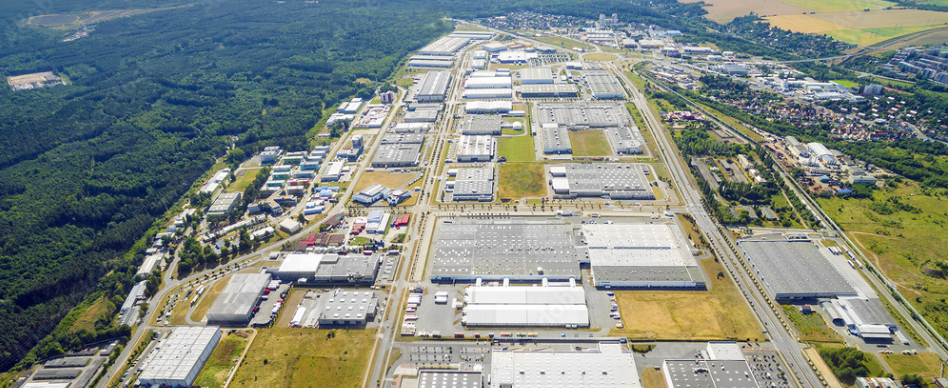
At the highest level, any regional manufacturing hub built around the set of clean, modern, strategic industries that I discussed above could be considered an "advanced industrial zone." But an Advanced Industrial Zone is also a very specific policy solution. When I talk about AIZs, I mean a designated geography – literally, an area drawn on a map – where state and local governments coordinate and align the necessary public inputs for industrial development. In particular, we focus on 5 Ps: Property, Power, Permitting, People, and a proactive state Partner.
Our group will work with state policymakers to identify and designate AIZs, and then help deploy the policy tools to bring them to life. This will involve leveraging a mix of existing resources (e.g., site readiness funds, workforce development programs) and the creation of new public authorities. The federal government has a lot of fiscal capacity, but it is not very well-equipped to do the tactical work of site preparation, utility interconnection, and local capacity-building that is necessary to turn investments into real-world projects and economic development. State and local governments, by contrast, are extremely well-versed in these tools. AIZs will expand and sharpen their toolkit, orienting it towards a vision for fostering next-generation industries in specific places.
Why take a zone-based approach?
If you work in the industrial policy or economic development world, you may be tired of hearing about zones. Opportunity Zones, Enterprise Zones, Innovation Districts, Special Economic Zones. Those are all interesting and useful models, and it is helpful to have a precedent to build on. But we aren’t just seizing on a term because it’s popular – in fact, there were many times where I went back to square one, considering other ways that states might get the right infrastructure and resources in place, only to arrive right back at the same conclusion: A zone-based approach.
In other words, I genuinely believe AIZs are the right solution for an America that is struggling to build next-generation industries. A zone-based model has several major advantages:
Enables speed and experimentation. By creating geographic “sandboxes,” states and communities can more easily remove constraints and iterate to enable the industrial development they wish to see, without needing to overhaul state-wide systems.
Positions the state as an active development partner. Designation of zones clarifies the role of the state as a shaper and aligner of real-world assets, not just a check-writer.
Supports place-based clusters. Cluster effects around workforce, innovation, and supply chain logistics are powerful ingredients for resilient industrial economies, and are behind many of the most successful manufacturing stories of the past half century – from U.S. biotech hubs to South Korea’s industrial parks to China’s EV cities.
Facilitates community input. Provides a framework to proactively address community goals and expectations around job quality, local benefits, and land use in certain geographies, encouraging a race to the top and minimizing project-by-project uncertainty.
Paves the runway for future investment. In recent years, we have seen federal funding and macro investment trends waffle in critical sectors, before projects can get sited and built. AIZs focus states and communities on preparing sites to be landing spots for investment, allowing future federal and private capital to go further, faster.
What happens next?
I’ll be publishing more on our approach and plans for 2026 in the weeks and months ahead. In the meantime, if you’re a state policymaker, economic development practitioner, or project developer eager to build America’s next great industrial engines – or if you simply have feedback – I’d love to hear from you at: jake (at) industrialzones.org.
A quick thank you: Over the course of the past year, I have spoken with more than a hundred brilliant folks – economic development experts, advocates and skeptics of “abundance,” policy wonks, labor groups. Much of this thinking was shaped by your challenges, affirmations, and inputs. Special thanks to Shannon Dwyer Higdon, who encouraged me from the beginning, as well as strategic advisors Noah Deich, Kate Gordon, Chirag Lala, Will Toaspern, and Costa Samaras.
